
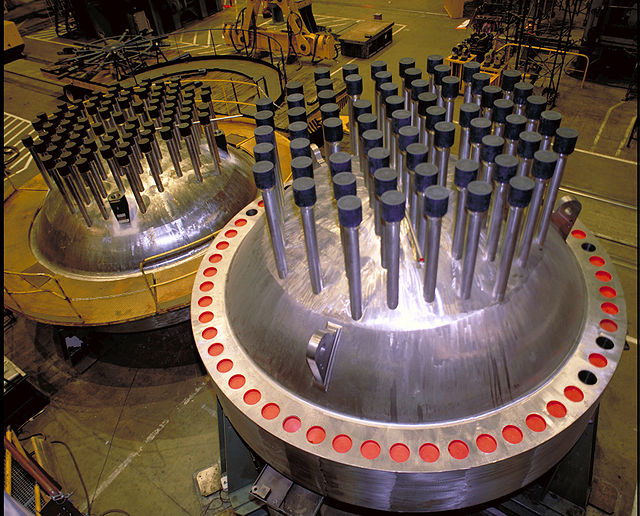
There are many types of nuclear reactors that serve the same purpose in a different way. Each reactor is classified by their moderator and their coolant. In this article, we will touch on the two main types of nuclear reactors and how prevalent they are in industry.
Boiling Water Reactor (BWR)
The BWR is the most rudimentary nuclear reactor there is and the second most prominent design. The water in the reactor acts as the coolant and the moderator to generate steam from direct contact with the fuel rods. The steam passes through turbines to generate rotational motion in a generator and produce electricity. The loss of energy in steam to the generator forces it to cool down. It is then condensed down to liquid water again from some natural source of coolant like a river or ocean. From here, the coolant pumps back into the reactor to start the cycle again.

The advantages of this are that it is very simple and less expensive than other designs on the market. Its simplicity lends itself to easy maintenance and quick understanding of the process. It is much faster and less expensive to erect new BWR plants due to their fewer number of required components.
The obvious downside to this type of reactor is that radiated fluid cycles throughout the entire process rather than isolating it from the power generation side. This leads to a high probability of issues arising. Put in place are tighter restrictions on steam turbines, generators, and condensers than should be necessary. When doing maintenance anywhere in the system, the BWR design forces you to interface directly with fluid from the reactor. This makes all work critical and expensive to control. Contact with contaminated fluid throughout the system is a not an issue with other types of nuclear reactors.
Pressurized Water Reactor (PWR)
The most commonly used reactor type is the PWR. Like the BWR, water is the moderator and coolant in this design. However, the steam is not in contact with the reactor. Contrast to the design to cycle reactor fluid through the turbines, the PWR instead transfers the steam energy generated in the reactor to a secondary loop through a large heat exchanger referred to as the steam generator. Since we don’t need to condense the steam in the reactor back down to liquid water like in the BWR, the reactor can run at a much higher pressure to heat a greater volume of water on the secondary side. The use of a large pressurizer accomplishes higher pressures and forces the water to remain a liquid for the system. This preserves energy that would otherwise be wasted through phase change in the BWR.

Advantages of this design are that you need to heat more water on the secondary side to keep the produced steam close to the condensation point which lends to less wasted energy on condensing. This also means that a loss of energy occurs in the secondary loop at the condenser as the reactor heats up. This results in less power generation. This is an important characteristic of the PWR as it leads to a safer design that is less prone to thermal runaway.
Another perk of the PWR is that the irradiated fluid from the fuel in the reactor is secluded from the rest of the process. This leads to a safer process with easier maintenance on components in the secondary loop. This is a contrast to other types of nuclear reactors.
A downside of this design is that the process consists of more components to take care of. In addition, there is so much emphasis on the health of the steam generator. Due to its complex design, it is difficult to care for and maintain. However, there is a large foundation of experience with this design today which makes routine maintenance more effective and leads to a safer, more efficient nuclear process. Read about how heavy water works in PWR reactors as a design choice here.
If you are interested in learning about less common and more complex nuclear reactor plant designs, click on the link below.
See also:
- Gas Cooled Reactor (GCR)
- Molten Salt Reactor (MSR)
- Liquid Metal Reactor (LMR)
- Small Modular Reactor (SMR)

Leave a Reply