
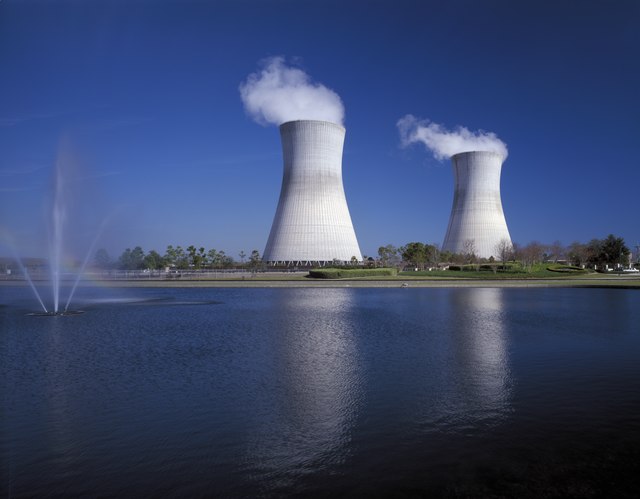
With global warming at the forefront of intelligent minds around the world, a look at clean energy solutions has become the focus of countless researchers and industry leaders. The most thought of are the most commonly talked about renewable energy sources – solar, wind, and hydrodynamic power. What people are so worried to bring up is the utilization of nuclear power.
Read on to learn about what nuclear power is, the common misconceptions surrounding it, and where the future of the marvelous energy generating technology is heading.
The Discovery and Development of Nuclear Energy
The First Steps in Nuclear Physics
In 1938, the creation of a controlled nuclear reaction took place for the first time. Enrico Fermi found that when he hit a collection of heavy atoms with a stream of neutrons, a greater variety of smaller atoms were present. In other words, larger sized atoms split up into smaller atoms to generate a tremendous amount of heat from the scission.

One year later, Lise Meitner and her nephew Otto Frisch determined that when heavier atoms capture a neutron, they begin to vibrate tremendously. This leads to the nucleus splitting apart along with some left-over neutrons. They calculated that there was a significant release of energy from this fission.
The World Began to Harness Fission Power
Soon following this discovery of fission power, the utilization of released neutrons created and sustained further reactions with nearby atoms. This spurred a rapid development in technological advancements to make harnessing this power a possibility. In June of 1951, the world’s first nuclear powered electricity generator began operation in Obninsk, Russia.
Uranium Enrichment is Required for Industrial Nuclear Reactors
Over many decades, nuclear power plants have sprung up all over the world for utilization. This required the mining and use of a newly sought after commodity – Uranium and Plutonium.
The most commonly used source of fuel for this discovered reaction is Uranium. Naturally, Uranium contains many different isotopes, the most abundant being Uranium-238 (U238). However, U238 is too stable to undergo fission easily.
The less common isotope, Uranium-235 (U235) makes up only 0.7% of natural uranium but is the perfect candidate for the fission reaction. Although this perfect atomic size makes up such a small portion of what we can collect, in large quantities we are able to produce a reaction from this.
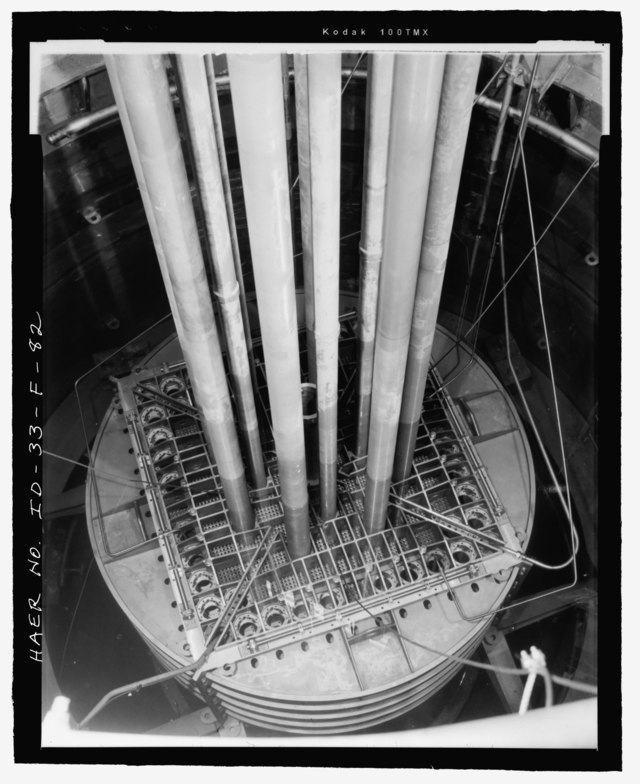
To capture and put to use this release of energy, capsules of fuel are placed into long rods. The well-organized fuel is submerged into a pressure vessel of water to heat into steam for the generation of electricity.
To make the process more efficient, a process known as enrichment separates U235 isotope from the rest by mass. The use of centrifuges in series is the most common method to enrich natural uranium for nuclear fuel. (See our article on enrichment to learn more).

Due to the high costs of running an enrichment process, the most cost-effective composition of U235 for use in commercial reactors falls within the range of 3-5%. Low Enriched Uranium (LEU) is the classification for enrichment within this range.
The creation of highly enriched Uranium (HEU) occurs once the enrichment composition of U235 becomes 20% or greater. The use for HEU is in smaller and more powerful applications. Read our article on Uranium enrichment to learn more about the enrichment process.
How Does a Nuclear Power Plant Work?
A nuclear power plant is a complex process that requires a large team of highly trained engineers and mechanics. Highly regulated and costly materials are necessary to ensure safety and functionality. Next, let’s dive into an overview of how a nuclear power plant works to bring us clean, renewable energy that lasts for decades.

Safety measures, the level of knowledge and experience required, and restrictive specifications make nuclear power plants complex. However, when taking a broad look at the overall process, it is simple to understand. Let us now dive into the nuclear process and how it works.
Fuel, Coolant, and a Moderater
As we already discussed, the placement of enriched Uranium fuel inside of a reactor vessel creates a large amount of heat from fission reactions. Let’s focus this a bit. Little cylindrical pods call fuel pellets hold the packed-down enriched uranium. The pellets are housed in fuel rods before they become submerged by water in the pressurized reactor vessel.

Once the plant is ready for startup, there is a release of a natural neutron emitter such as plutonium or Beryllium into the reactor. This allows the first collision and fission of uranium to begin. The moderator is fluid where the release of neutrons disperse throughout. This slows down the neutrons so that they are more likely to create another fission reaction, making them thermal neutrons. In a typical reactor, the moderator is water but depending on the type of nuclear power plant you are using, it may be some other substance such as graphite.
Steam Production
From here, a chain of many reactions grows exponentially as the reactor heats up. A rapid increase of heat production creates a phase transition of pressurized water into steam takes place. Steam drives a turbine which converts the mechanical energy into electrical energy, or electricity.
The Condenser
Next, the condenser collects the spent steam and cools it further to water for recycle back to the reactor. The condenser uses coolant that usually comes from a natural source like a river.
Reactor Coolant Pumps
As the cycle of this process continues, you can imagine the reactor gets hot as the reaction grows exponentially. To avoid overheating to the point of meltdown, there needs to be a way to slow the reaction before it runs away.
While massive cooling pumps called reactor coolant pumps continue to cycle large volumes of cold water through the reactor, it is not enough to reach an equilibrium in cases of emergency. Reactors come equipped with a way to intercept neutrons out of the water before colliding with Uranium once again. The solution: control rods.
Control Rods
The manipulation of control rods in and out of a reactor, affect the rate of fission reactions. This allows operators to control the operating temperature and pressure.
Neutron deficient elements such as Boron make up the control rods. This makes the control rods absorb neutrons from the water. When the further submersion of the rods take place, there is a decrease in the probability that a neutron collides with U235. This lessens the number of reactions that take place and the temperature will begin to drop.

You can read many of our other articles to learn more about how nuclear reactor processes work.
What About Radioactivity?
Nuclear power is a marvelous discovery that allows us to generate clean and renewable energy for decades, but with all good things there are pitfalls. As discussed before, when plants do not take proper precautions and controls seriously, disaster from nuclear reaction runoff can occur.
The fission products of Uranium can be highly radioactive. When exposed to at consistent doses, they can cause cancer or in cases of high doses even death. To ensure that these cases do not happen, it is extremely important to practice proper protection and control schemes. Unfortunately, due to improper plant operations and emergency action plans, the world has experienced these types of health cases.
What exactly is radioactivity though and why is it so harmful. All atoms naturally degrade over time. If an atom has too much energy, it will release a gamma wave to expel its instability. If it has too much mass, it will release an alpha particle (two protons and two neutrons). As atoms release electrons, Beta particles emit. With this instability, all atoms possess some quantity of radioactivity that could emit a particle of mass or energy that may be harmful to our cells.

How Can This be Mitigated?
The utilization of shielding mitigates radiation exposure. For the heavier alpha particles, the water is enough to stop it from making it outside of the reactor. Gamma particles are much smaller and travel faster so they need something a lot more dense to stop it. The implementation of lead shielding in every reactor stops gamma radiation from escaping the reactor.

Uranium is just large enough where if it were to become unstable, it could fission. The fission process inhibits the production of smaller radioactive isotopes with shorter half life’s. At shorter half life’s, the emitted gamma rays, alpha particles, beta particles, and neutrons are in a smaller time frame. This acute exposure would cause damage to your cells. Since we force Uranium into an unstable state as U235 to begin its marvelous energy producing reaction, we are also at the mercy of it breaking down into particles that release harmful doses of radiation. In the case where a meltdown occurs, this exposure would be detrimental to the environment. However, with the proper controls and process design schemes, we can eliminate catastrophic events like Chernobyl and three mile island from happening.
Is Nuclear Power the Answer?
As we learn and understand nuclear power more and more, the world is beginning to see it as a potential solution to any energy shortage concerns that we have. It is a clean and renewable source of energy that is extremely dense and plentiful for decades and decades to come. Nuclear power also requires the least amount of space when compared to every other renewable option available today. Before we can say for sure whether nuclear power will be a viable option, we first must consider a few things:
- Funding: Nuclear power requires a large upfront cost from investors. It is difficult to consider this as an option when there are many cheaper and easier options.
- Waste Streams: After refueling, nuclear fuel must spend the rest of its life decaying which deems those areas unlivable due to the radiation that it will continue to emit. This issue is just a part of the third point which is,
- Public Opinion: Due to the negative portrayal of nuclear power plants in media due to nuclear catastrophes in the news, the public opinion towards this source of energy is poor. Before we get to a world run on nuclear, the industry must earn public trust through education on how proper controls and safety measures in the nuclear industry leads to safe operation.
So, is nuclear power a viable option? With new advancements in this technology developing constantly with options like Small Modular Reactors (SMRs) and groundbreaking research in fusion energy, the world is steering the ship around on nuclear power. Nuclear power could be a wonderful option for a clean and renewable world once the public has solutions to the mentioned pitfalls.
Related Posts
-

NRC Approves Construction Permit for TerraPower’s Natrium Advanced Reactor
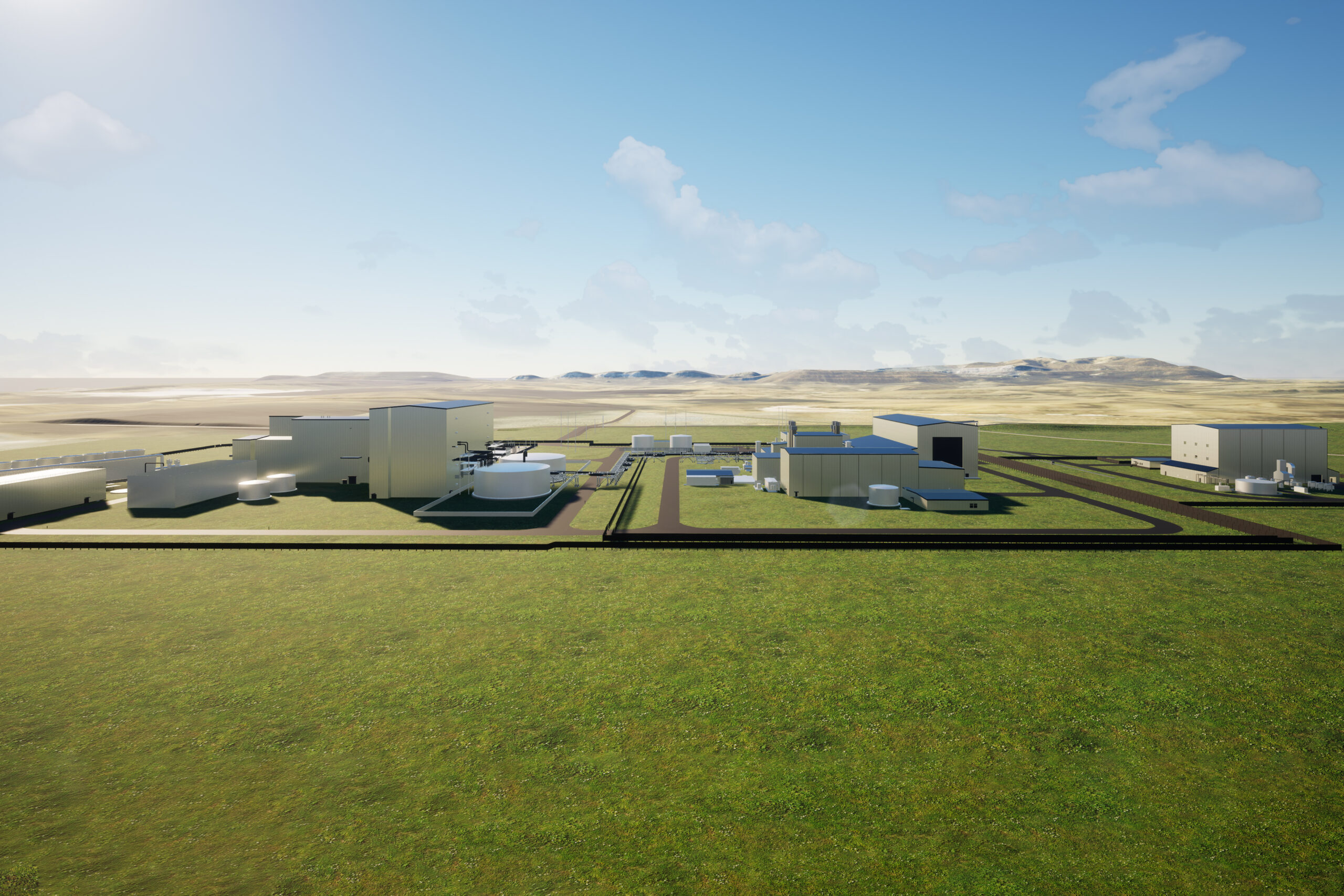
The U.S. Nuclear Regulatory Commission (NRC) has issued the first construction permit for a commercial-scale advanced nuclear power plant to TerraPower for its Natrium reactor (Kemmerer Unit 1) in Wyoming. The 345 MW sodium-cooled fast reactor, featuring a molten salt-based energy storage system, is being developed under the DOE’s Advanced Reactor Demonstration Program. The NRC…
-

US Military Conducts First Airlift of Next-Generation Nuclear Microreactor
On 15 February 2026, the US military successfully airlifted the Ward 250 nuclear microreactor from California to Utah using a C-17 Globemaster III aircraft. This operation marks the first time a nuclear microreactor has been transported by air, aiming to demonstrate the rapid deployment potential of advanced nuclear technologies for both military and civilian use.
-

State by State: America’s Nuclear Future Is Taking Shape
States across the country are entering a new chapter for nuclear energy, with Iowa and Illinois now emerging as the latest contributors to a revival on the national stage. Through new legislation, executive action, and private investment, both states are positioning nuclear power as a clean, reliable foundation for future energy needs, reflecting a shift…

.jpg)
.jpg)
Leave a Reply