
Intro: Chernobyl is such a catastrophic failure for the people involved and the environment surrounding the meltdown. Moreover, this disaster halted the research and development of such an abundant and dense source of power that has set us back decades from growth in this field of energy.
Read on to learn about the design flaws, operation failures, and events that lead to the explosion of the reactor plant in the Soviet Union on April 26, 1986.
The RBMK-1000, A Soviet Designed Reactor
Pressurized water reactors (PWR) and boiling water reactors (BWR) are both cooled and moderated using light water (except for heavy water reactors as used in the CANDU reactor design). The coolant is pumped into the reactor to create one homogenous pool of liquid water surrounding the rods. This ensures that the reactor is always cooled as a whole unit.
The Soviet design for their RBMK-1000 reactor, which stands for high-power channel reactor when translated is also cooled with water. However, their design is very different in that each rod is individually cooled by an outer tube of water. This is a favorable design for a one for one swap of the fuel rod assemblies as they continue to run the reactor. This is important because it minimizes the need to shut down the reactor when refueling, saving both time and energy.
The RBMK-1000 design, which utilizes light water as a cooling media like the conventional PWR and BWR, uses a different moderator – that is graphite. Unlike light water, the use of graphite as a moderator is favorable because of its low neutron absorption properties, allowing for a higher neutron economy (a measure of the number of neutrons that can cause fission compared to the number needed to maintain the chain reaction). These reactors are also referred to as light water graphite reactors (LWGRs). This is much like how heavy water acts as a moderator in the CANDU reactor.

The issue of this design is that it has a positive void coefficient – the change in reactivity of a nuclear reactor increases as voids form in the reactor. That means in this case that as steam builds up in the fuel assemblies, the power generation actually increases. In a PWR, this is not the case since the increased pressure increases the speed of the neutrons and thus slows the reactor down.
As steam builds up in a light water reactor, the availability of thermal neutrons (slow neutrons available for fission reaction with U235) decreases due to a decrease in volume of the moderator. On the other hand, when steam builds up in the LWGR design, graphite is still moderating at its full potential only now, there is less cooling water. This can lead to rapid production of heat in the reactor.
What happened on April 26, 1986?
On the night of April 26, 1986, a safety test was planned and conducted to determine how long the turbines and generators would run the reactor coolant pumps in the event of a power failure before the emergency generators would be kicked on. To start this test, they cooled the reactor by lowering the control rods. However, due to a shift in understanding of the procedure after a shift change to night, the control rods were lowered beyond the operating requirements of the test. This was not in accordance with the testing procedure. The lowering of the control rods beyond the point required caused the power to decrease as the control rods were now absorbing neutrons from out of the water.
This is a good time to point out another design flaw of the LWGR. The use of graphite as the moderator enables the continued production of thermal neutrons. Thus, fission reactions with U235 continue since the fuel rod assemblies are contained within the moderator. This ongoing reaction was not enough to generate any heat as the control rods were absorbing a majority of the neutron, but there was still a enough to produce byproducts of the fission of U235.
One of these byproducts in particular is important to note as it plays a critical part in the way this story unfolds. In the process of fission reactions, neutrons split the U235 into smaller atoms and a few leftover neutrons. One of the possible atoms that is produced from the fission of U235 is Xenon 135 (Xe135). Xe135 is an atom used in shutting down a reactor in case of emergency as well. This is because it is one of the best atoms at absorbing neutrons, much like the control rods. This sounds like a good thing, right?
Well, Xe135 is typically neutralized by a neutron as they are produced in the reactor and do not affect normal operations. However, with the control rods down, the Xe135 began to accumulate. Although power production was not affected by the continued fission reactions, a slow buildup of this byproduct was caused.
Once it was realized that the power generation was lower than the procedure required, the operators began to pull the control rods up. Since there was a large accumulation of Xe135, the reactor did not begin producing power from the control rod adjustment. So, they pulled the control rods out a little more. Then more… until they had removed all but 8 out of the 211 control rods in the reactor. This was in violation of all safety guidelines. This saw a slight increase in power production again and the operators were instructed to move forward with the next step of the test – shut off the primary reactor coolant pumps and emergency systems to find out how long it took for the backup generators to kick on.

The Next Part Happened In 54 Seconds
After pulling the control rods, the rest of the Xenon was neutralized and a rapid increase in power production began, leading to a build-up of pressure and temperature.
Remember that positive void coefficient that is characteristic to the LWGR design? Well, once the coolant pumps shut off cooling water to the reactor, a massive power surged. Steam buildup was increasing the reaction because the pressure increase made the cooling power even less and the neutrons were still able to slow down with the graphite moderator surrounding the fuel without any cooling power.
With no more Xe-135 to mask the buildup in neutrons and with all the control rods removed, fission was occurring at a rate much faster than was safe. The only thing that could make this worse is a further buildup of pressure beyond the limits of the reactor pressure vessel.
Let us take a moment to talk about scram. SCRAM is a shut down of the reactor by fully submerging the control rods into the reactor. Control rods are made of boron carbide, which is great for neutron absorption and in the RBMK-1000, the tips are made up of graphite, the same material as the moderator. Therefore, as the control rods move in and out of the reactor core, the reaction continues at the ends of the rods. Not only this, but by the ideal gas law, when objects are ejected into a fixed volume, an increase in pressure and/or temperature occurs. This is called the positive SCRAM effect and only occurs when in critical conditions already.
The operators realized the sudden surge in power production and in an attempt to stop the reactor, sent every control rod into the reactor vessel. Instead of decreasing the power production, they experienced the positive SCRAM effect. This was beyond the limits of the reactor pressure vessel.
Just 18 seconds after this, the reactor exploded. This sent a wave of oxygen to flood the boiling hot graphitic coals that were now at atmospheric pressure, causing the second combustion explosion.
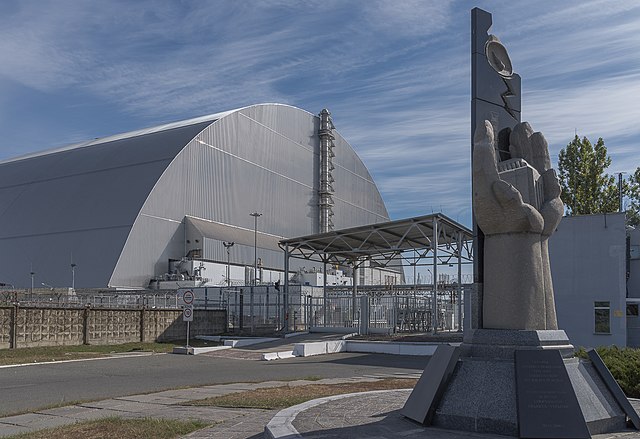
Radiation leaked out from the explosion and impacted the entirety of Europe to this day. 31 workers had died. What’s left of the reactor site in Chernobyl is a massive concrete and steel containment where it will continue to decay for tens of thousands of years. The containment will need to continually be replaced throughout its lifetime.

How Could This Have Been Avoided?
The irony of them doing a safety test shows that nuclear reactors require a strong level of understanding surrounding nuclear physics and controls. This is necessary to be able to make informed decisions in operations.
A delay in the test due to regional power demands caused the night shift crew to man the job. They were not as experienced as the day shift operators were, which led to less understanding of the proper actions to take. The supervisors who ordered the continuation of the test even when power was still low, and control rods were pulled out were also less experienced and did not understand the potential repercussions of continuing the test.
Reactor design has a huge impact on operations and an inexperienced crew can be ignorant in the warning signs which are necessary to pick up on to safeguard from catastrophe. A design like the RBMK-1000 requires knowledge about the void coefficient and the continuation of the reaction due to a constant presence of a moderator. With this understanding, a stop to the test should have been made.
An understanding of the chemical production of the fission process would have warned the operators, supervisors, and engineers present that an influx of xenon would keep the power production low and that they were not supposed to pull the control rods like they did. Following safety procedures should have made this avoidable regardless.
This also shows that indication reading and constant chemistry sampling, testing, and analyzing of the reactor fluid is necessary to ensure proper reactor safety. Implementation of these procedures would have helped unaware workers of an issue.
Improvements in plant designs and indicators stemmed from this. Sampling and instrumentation to read the chemistry of the water would help indicate high level of neutron absorbers and therefore an expected reduction in power. This level of detection could lead to an engineer or supervisor not ordering the removal of so many control rods and instead directing a gradual pull-out of the rods over a long period of time.
The series of events that led to this catastrophe could have been avoided many times throughout the test but a lack of knowledge and experience in a critical power plant, coupled with poor plant conditions led to its explosion.
Today, a great deal of knowledge, regulations, and design principles allow nuclear power plants to function safely to provide our world with clean energy for years to come.


Leave a Reply